Building a Pool Near the Ocean: Sand, Tide, Wind and Salt
A pool on the ocean's edge is a different job than a pool in a suburban backyard, and most of the difference is underground.
October 27, 2026 · 4 min read
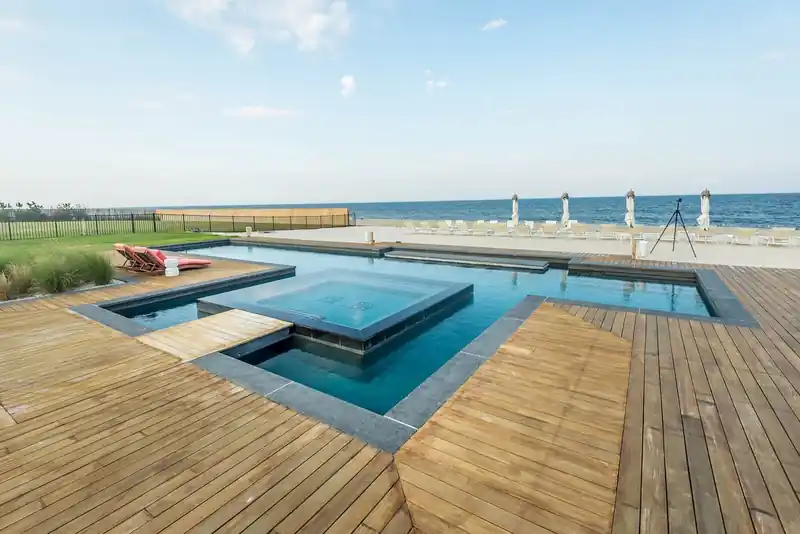
Everybody wants the pool with the ocean view. It's the postcard version of a backyard. What the postcard leaves out is that the ground under it is not the same ground you'd dig into a few miles inland, and the weather it lives in is harder on everything. Pool Docs has built at the ocean's edge, and they're candid about how it went. Their description of the Symmetry at the ocean project says: "Building in sandy soil while battling high tide was no easy task, but we'll let the results speak for themselves."
Why sandy soil is its own problem
Sand looks easy to dig. It is easy to dig, which is exactly the trouble. Dry sand doesn't hold a vertical wall. Dig a deep hole in it and the sides want to slump back in, so a crew has to think about how to keep the excavation open and stable while the structure goes in. Sand also moves under load and under water, so the question of what the pool shell sits on, and how that base gets prepared, matters a great deal.
None of this is unsolvable. Builders have worked in coastal ground for a long time. It just means the plan for a shore property starts earlier and asks more questions than a plan for firm, clay-heavy soil. Ask any builder you're considering how they approach sandy ground, and listen for specifics, not reassurance.
High water tables and tides
Near the ocean, groundwater sits close to the surface, and it can rise and fall with the tide and with storms. That's the "high tide" in Pool Docs' project note. An empty pool shell is a big hollow object in wet ground, and water pushing up from below can be a real force on it. Water also floods an excavation, which makes the digging, forming and finishing work harder to sequence.
This is why timing and planning on a coastal job are not an afterthought. The people on site need to know how the water behaves on that lot, how to manage it during the build, and what to do about it for the life of the pool. How that gets handled depends on the property, so it's a question for your consultation, not something to settle from a blog post.
Wind and salt
Once the pool is in, the shore keeps working on it. Wind carries sand and salt spray across the deck and into the water. Salt is rough on metal, so the choice of fittings, rails, furniture and equipment housings deserves attention. Wind also blows debris into the pool and dries the water faster, which changes how much upkeep a pool wants. A cover and a regular maintenance routine matter more at the beach than they do a few towns inland.
Deck materials have their own concerns. Hot sand tracks across everything, wood weathers, and stone and pavers handle the salt air differently. Ask what holds up near salt water, and ask what each option looks like after a few seasons, not just on day one.
What Symmetry at the ocean shows
Pool Docs lists Symmetry at the ocean as one of its three featured builds. The description is short and honest: the pool was "dreamed up by our client," and the team collaborated "with a great designer and contractor to bring this pool on the ocean's edge to life." That tells you two useful things. First, a project like this is a group effort, with a designer, a contractor and a pool builder all working from the same vision. Second, the client's idea came first, and the build had to answer to the site.
Pool Docs describes the result as "spectacular, original, absolutely beautiful." You can judge that yourself in the gallery. The geometry is clean and the setting is the whole point, and none of it would look that way if the hard work underground had been skipped.
Questions for a shore property
- How have you handled sandy soil and a high water table on past jobs?
- What happens to the pool if water rises around it, in the build and afterward?
- Which fittings, covers and deck materials do well in salt air?
- Who else is on the team, such as a designer or general contractor, and how do we coordinate?
- What does a maintenance routine look like for a pool this close to the water?
Ask what approvals a waterfront lot needs, too. Coastal properties often carry extra rules, and your consultation is the right place to find out which ones touch your plan. Pool Docs builds residential pools from oceanfront decks to grandma and grandpa's back yard. You can read more at /services/residential-pools, or call 732.300.2481 to talk through your lot.
Pool Docs, 732.300.2481
Call 732.300.2481More articles
What to Decide Before Your Custom Pool Consultation
You don't need a finished plan to book a consultation, but a few opinions made at the kitchen table will save you a lot of circling later.
Pool Openings and Closings in a New Jersey Year
Two visits a year decide how the other months go: the opening that starts your season and the closing that protects the pool through winter.